
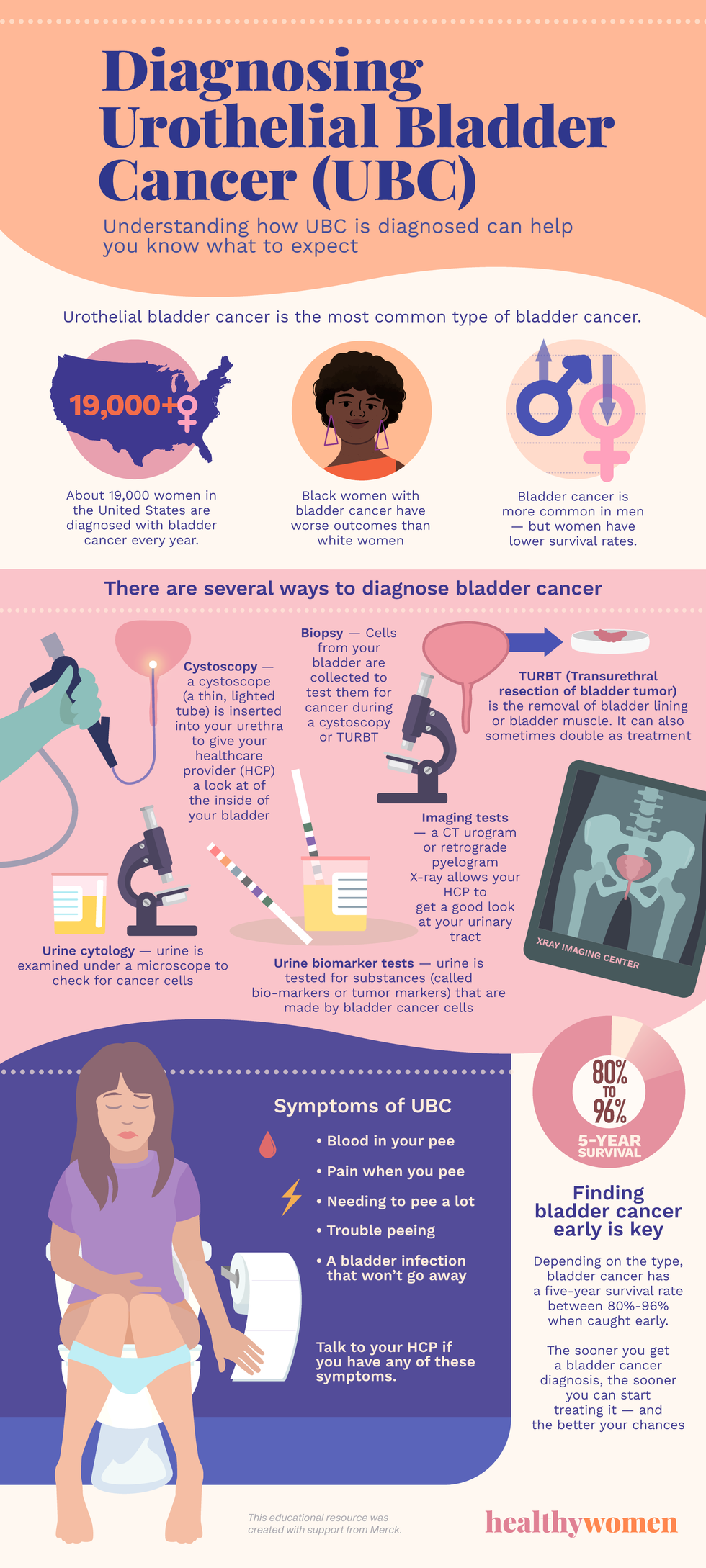
Urothelial bladder cancer is the most common type of bladder cancer.
-
About 19,000 women in the United States are diagnosed with bladder cancer every year.
-
Bladder cancer is more common in men — but women have lower survival rates .
-
Black women with bladder cancer have worse outcomes than white women.
There are several ways to diagnose bladder cancer
-
Cystoscopy — a cystoscope (a thin, lighted tube) is inserted into your urethra to give your healthcare provider (HCP) a look at of the inside of your bladder
-
Biopsy — Cells from your bladder are collected to test them for cancer during a cystoscopy or TURBT
-
Transurethral resection of bladder tumor (TURBT) — removal of tumors from the bladder lining or bladder muscle
-
TURBT can also sometimes double as treatment
-
Urine tests
-
Urine cytology — urine is examined under a microscope to check for cancer cells
-
Urine biomarker tests — urine is tested for substances (called biomarkers or tumor markers) that are made by bladder cancer cells
-
Imaging tests — a CT urogram or retrograde pyelogram X-ray allows your HCP to get a good look at your urinary tract
Symptoms of UBC
Symptoms of UBC include:
-
Blood in your pee
-
Pain when you pee
-
Needing to pee a lot
-
Trouble peeing
-
A bladder infection that won’t go away
Talk to your HCP if you have any of these symptoms.
Finding bladder cancer early is key
Depending on the type, bladder cancer has a five-year survival rate between 80% -96% when caught early.
The sooner you get a bladder cancer diagnosis, the sooner you can start treating it — and the better your chances of beating it.
Resources
Bladder Cancer Action Network
This educational resource was created with support fro m BD and Merck.