
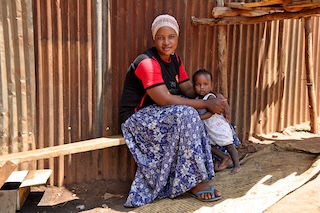
 A new study published in Health Care for Women International looked at the impact of Transcendental Meditation (TM) on psychological distress and coping in the lives of women in Uganda. The study was a randomized control trial, considered the gold standard of research studies, and took place following two extensive lockdowns during the Covid-19 pandemic in Uganda.
“While Uganda had a relatively small Covid outbreak, the lockdowns caused great hardship for Ugandans, especially women living in city slums,” study author Leslee Goldstein told us. “The documented challenges for women living in poverty in Uganda are overwhelming, but these crises situations made things even worse. These women became so stressed. We wanted to find out if their overload of stress could be lessened by using Transcendental Meditation.”
Research has shown TM to be an effective stress release practice for people all around the world, and especially for women in Uganda. Two previous studies with Ugandan women living in poverty have shown positive changes and improved quality of life. With this study, the researchers wanted to learn about the impact of the practice for women during a severe societal crisis.
“Our theory was that TM could reduce mental and physical stress and help these women become stronger in themselves, to develop their inner resources, improve their coping ability, and rise above their challenging circumstances,” Goldstein told us. “TM has been shown to allow a person to reduce stress and access inner reserves, producing greater energy and resilience. Our theory was that TM could help our participants make a shift and get their lives back on track following the Covid lockdowns.”
The research team decided to embark on the study due to the fact that there are many organizations in Uganda serving women, teaching them skills, offering them counseling, and helping them to improve their circumstances. Among these organizations, there are several thousand women in Uganda already practicing TM taught by African Women and Girls Organization (AWAGO), who have reported positive benefits in their lives.
“This new group at the Amazing Women Community Organization was part of these ongoing TM courses offered for women in Uganda,” Goldstein told us. “Since courses were already scheduled, this was a unique opportunity at this particularly challenging time after the Covid lockdowns to explore and document the impact of TM in the lives of these women. This project became a valuable collaboration between our research team, AWAGO, and the Amazing Women Community Organization who recruited and organized this group of women for the study.”
There were a total of 199 participants with a TM group and a wait list control group. Participants were asked to evaluate their stress levels and provide an idea of how they are handling stress in their lives. The research team also looked at self-efficacy, which is one’s perceived ability to deal with challenging circumstances.
“This measure allowed us to gauge participants’ ability to cope with life,” Goldstein told us. “A related measure was anger. We chose to look at this because the literature points out that women in such challenging circumstances often tend to react with anger towards those in their environment, including their children, when they feel hopeless and are overly stressed.”
Participants also answered questions to gauge fatigue and sleep quality, important physiological parameters impacting one’s mental wellbeing, as well as energy and vitality. They are also critical components for coping, perseverance, and stress management. The questionnaires were used in the beginning and again three months later. Following the three-month post-test, the control group was given the opportunity to learn TM, and all chose to do so.
“After eight months, the TM group participants completed a follow-up questionnaire providing short answers to questions about changes in mental and physical health, as well as changes they had noticed in relationships at home and in the community,” Goldstein told us. “At this time, we also asked questions about their ability to handle domestic violence, which, as in many places around the world, increased in Uganda during Covid. The lockdowns forced Ugandans in the city slums to live in very close quarters for an extended time, which created critical added challenges.”
Results demonstrated statistically significant decreases in perceived stress, the primary outcome measure, as well as anger, and fatigue. Results also showed significant improvement in self-efficacy and improved sleep quality.
Ninety-three out of 96 of the TM group completed the follow-up questionnaire at eight months. Ninety-one reported improvements in physical and mental health. All mothers reported improved relationships with children, and 85 reported improved relationships with neighbors. Of the 10 women who reported they had experienced domestic violence, nine shared that it decreased after starting TM.
“We were not surprised with these results,” Goldstein told us. “Reports from TM teachers in Uganda, and many community organizations where TM has been taught, have been hugely positive over the years, and we expected this group would report the same. Our goal was to conduct a professional research study, using a gold-standard randomized controlled design, that would document the benefits of TM for our specific population.”
Goldstein believes the results show the efficacy of their theory, giving them powerful validation of the effectiveness of the TM technique to help women living in such challenging circumstances.
“Our results indicate TM doesn’t just help women to manage stress,” Goldstein told us. “TM helps them to reduce and eliminate it.”
Goldstein believes it is critically important for these women to have a tool that they can use themselves, for themselves, by themselves.
“TM has given them greater inner strength, peace and calm, and more energy,” Goldstein told us. “They feel better about themselves. They feel empowered from within, and more capable of manifesting a smoother path forward in their lives.”